

What does “anonymous” mean when a Bitcoin transaction is broadcast from a phone in New York or a laptop in San Francisco? The quick answer is: it depends on which layer you look at. Privacy in cryptocurrency is a stack problem. There’s device security, network routing, key custody, coin-level heuristics, and the protocol features of each chain. That stacking matters because a single weak link — a leaked IP, a reused address, or an observable UTXO consolidation — can turn a technically private payment into an investigable trail.
This article compares practical approaches to anonymous transactions for a US-based, privacy-conscious user and explains how multi-currency wallets can combine different techniques without turning complexity into risk. I’ll unpack the mechanisms behind on‑device protections (like Secure Enclave/TPM), network anonymity (Tor/I2P and custom nodes), and coin-level features (Monero subaddresses, Bitcoin PayJoin, Litecoin MWEB, Zcash shielding). I’ll also point to decision heuristics that help you choose a wallet and a workflow that fits your threat model.
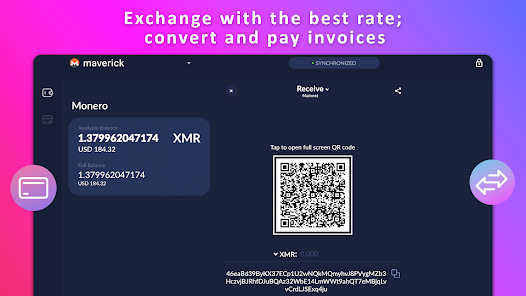
Privacy as a layered mechanism: keys, device, network, and coin logic
Think of privacy as four connected mechanisms. First: custody and keys. If a wallet is non-custodial and open-source, you retain exclusive control of private keys — a crucial baseline. Second: device-level protections. Hardware-backed keystores (Secure Enclave on iOS; TPM on Android) encrypt keys and make extraction vastly harder than software-only storage. Third: network anonymity. Using Tor, I2P, or connecting to your own node hides the IP that broadcasts transactions. Fourth: coin-protocol privacy. Each currency has different primitives: Bitcoin has UTXOs and tools like PayJoin; Monero has built-in ring signatures and stealth addresses; Zcash has shielded pools; Litecoin MWEB offers an optional MimbleWimble privacy layer.
When these mechanisms are combined correctly, they create layered defense-in-depth. But they can also interact badly. For example, sending a shielded Zcash output to a transparent address undoes protocol-level privacy; connecting to a public Electrum server leaks an IP even if your keys are on a hardware wallet. A useful mental model is that privacy is multiplicative: your overall anonymity is roughly the product of how many layers you secure, not the sum.
Comparing approaches: Monero vs Bitcoin (and hybrids) for anonymous transactions
Monero and Bitcoin represent two ends of a privacy design spectrum. Monero builds privacy into the protocol with ring signatures, stealth addresses, and confidential transactions; privacy is default, so every transaction mixed with others by design. Bitcoin, by contrast, is transparent by design and relies on off‑chain and on‑chain techniques — PayJoin, Silent Payments, batching, UTXO coin control, and mixing services — to reduce linkability. The trade-offs are instructive:
– Monero: strong protocol-level privacy without user choreography; fewer operational mistakes that expose metadata. But Monero is not bulletproof: wallet metadata (node IP, view keys) and user behavior (reusing subaddresses, leaking receipts) still matter. Many wallets mitigate these risks by keeping the private view key local and supporting background sync to avoid exposing IP via RPC calls.
– Bitcoin: flexible tooling and broader liquidity, but privacy is fragile and requires deliberate practices. Techniques like PayJoin v2 reduce change address fingerprinting by constructing transactions collaboratively with the recipient; Silent Payments add stealth-like addressing; UTXO coin control lets you decide which outputs to spend, preventing accidental consolidation. However, the user must actively choose these options and understand UTXO linkage.
Hybrid wallets that support both currencies well let you choose the right tool for the job: use Monero for opaque transfers where you want default unlinkability; use Bitcoin with PayJoin and Tor when you need wide acceptance and auditable proof of payment. The caveat: cross-chain swaps and built-in exchange features can leak metadata if not routed privately. Using decentralized routing (such as NEAR Intents) reduces reliance on a single counterparty, but the act of swapping still creates on-chain footprints on both sides that deserve consideration.
What a privacy-focused wallet should provide — and how Cake Wallet maps to those needs
A thoughtful privacy wallet should deliver non-custodial key control, hardware-backed encryption, network anonymity options, coin-specific privacy features, interoperability with hardware signers, and a zero-telemetry stance. It’s also important that the wallet is open-source so analysts can confirm behavior and that it avoids collecting transaction or device telemetry.
In practice, these features function differently by design and require different user choices. For example, device-level encryption (Secure Enclave/TPM) secures keys at rest and helps with local authentication (PIN/biometric), but it doesn’t anonymize network traffic. Tor or I2P modes hide IPs but add latency and may conflict with some node discovery mechanisms. Hardware wallets add a physical security boundary but require careful setup to avoid exposing addresses through companion software. A realistic trade-off assessment must weigh usability against the specific aspects of privacy you care about.
If you’re evaluating wallets that combine Monero, Bitcoin, Zcash, Litecoin and more, it’s worth testing whether the wallet enforces coin-appropriate defaults (for example, mandatory shielding for Zcash to avoid leaking transparent addresses) and whether it protects key material locally (e.g., never exporting private view keys). Practical users also need flexible node configuration, so you can point the wallet to a personal node or use Tor. For those who want a single place to manage multiple coins while keeping privacy controls intact, a wallet that integrates these mechanisms thoughtfully can simplify workflows; you can learn more about one such multi-currency, privacy-focused wallet here: https://cake-wallet-web.at/
How attack chains unfold and the boundary conditions where privacy breaks
Understanding how attacks unfold helps prevent them. A common chain begins with IP leakage: your device queries a public node, revealing your IP address. Analysts correlate that with timestamps and address activity. Another chain starts with key leakage or poor change management: consolidating small UTXOs in Bitcoin creates linkable clusters. A third chain is behavioral: posting the same address on a public forum or reusing an address across chains and services creates easy heuristics for deanonymization.
Boundary conditions matter. Even protocol-grade privacy like Monero’s is vulnerable if the node you connect to can see your IP and link it to certain wallet actions. Similarly, PayJoin reduces change address linkage on Bitcoin, but it requires the recipient’s wallet to support the protocol; if it doesn’t, using PayJoin is impossible. And hardware wallets protect keys but do not hide transaction broadcast metadata unless paired with a privacy-preserving client and network layer.
Decision heuristics: choose a wallet and workflow that match your threat model
Here are practical heuristics you can reuse when choosing tools or shaping habits:
1) Define your adversary: casual observer, chain analyst, service subpoenas, or targeted state-level surveillance. The stronger the adversary, the more layers you must harden (hardware wallet + Tor + custom node + coin-specific defaults).
2) Prefer defaults that are private-by-design for a given coin: mandatory shielding for Zcash prevents inadvertent leaks; Monero’s subaddresses are easier and safer than address reuse.
3) Use hardware-backed key stores and, where possible, a hardware signer to reduce extraction risk. But remember: hardware alone does not protect your network behavior.
4) When using Bitcoin, adopt tools like PayJoin v2, coin control, and transaction batching to avoid accidental linking. Use Silent Payments or stealth-like schemes when available to avoid address reuse.
5) Avoid centralized swap providers when privacy is paramount. Decentralized routing systems that aggregate market makers reduce the single-point-of-trust problem, but swapping still produces on-chain traces you should assess.
Practical workflow example for a US privacy-minded user
Suppose you need to receive and later spend funds anonymously. A defensive workflow could look like this: generate a non-custodial Monero wallet on a device with Secure Enclave/TPM enabled, use subaddresses for receipt, enable background sync and Tor-only mode when broadcasting, and never export your view key. For Bitcoin receipts where acceptance matters, request a PayJoin-capable invoice and connect through Tor; maintain coin control to avoid merging unrelated UTXOs. When swapping between coins in-wallet, prefer decentralized routing and, if possible, route the swap through privacy-friendly chains rather than centralized exchanges. This workflow recognizes the strengths and weaknesses of each coin and coordinates device, network, and protocol protections.
FAQ
Will using Tor make my transactions perfectly anonymous?
No. Tor hides your IP against many observers but is not a panacea. Tor can be misconfigured, and timing correlations or malicious exit nodes can still expose metadata. Also, Tor does not change on‑chain traces or fix poor wallet hygiene (like address reuse or UTXO consolidation). Treat Tor as a strong network layer that must be paired with sound custody and coin-level practices.
Is Monero always better than Bitcoin for privacy?
Not always. Monero offers strong, built‑in privacy, which lowers user error. But Bitcoin offers wider liquidity and different tooling that can be more convenient for payments or merchant integration. Your choice should be based on what privacy properties you need (default unlinkability vs. broad acceptance), your tolerance for operational complexity, and whether you can follow the necessary practices for Bitcoin privacy.
Do hardware wallets break privacy?
No; they improve key security. But hardware wallets do not anonymize network traffic and may require companion software that broadcasts transactions. To maintain privacy, pair hardware devices with a wallet client that supports Tor or custom nodes and does not leak telemetry.
What is the biggest single mistake users make?
Complacency: treating a single tool as sufficient. Users often assume that a private coin or a hardware wallet alone solves all problems. The reality is layered: keys, device, network, coin, and behavior must all be considered. Missing one link is enough for correlation attacks.
Where to watch next: keep an eye on adoption of PayJoin v2 across wallets, which raises the baseline for Bitcoin privacy if widely implemented; watch the growth of decentralized routing services for swaps, which can reduce centralized metadata aggregation; and monitor legal/regulatory attention to privacy coins, which could change exchange accessibility and operational constraints in certain jurisdictions. These are conditional signals — useful to watch but not deterministic.
Final takeaway: choose a wallet that makes private defaults easy, lets you control nodes and hardware integration, and documents how it handles keys and telemetry. Layer protections deliberately: secure keys with hardware-backed storage, hide network metadata with Tor/I2P or custom nodes, and use coin-specific privacy primitives appropriately. That approach turns a vague claim of “anonymous transactions” into an actionable, auditable strategy.